
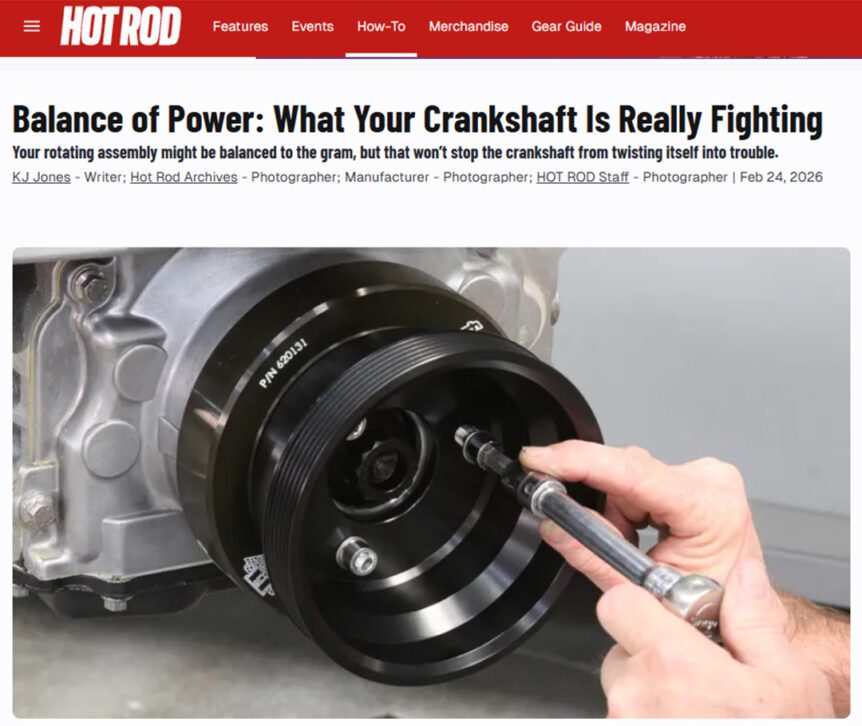
HOT ROD has published a technical deep dive into one of the most misunderstood components in high-performance engines: the harmonic damper. In this latest article, Fluidampr contributes engineering insight to clarify the difference between a “harmonic balancer” and a true torsional vibration damper — and why that distinction matters for crankshaft durability and reliability under power.
🔗 Read the full article here: https://www.hotrod.com/how-to/harmonic-damper-vs-balancer-internal-external-zero-balance-tech
What Readers Will Learn
The article breaks down three areas that are critical for engine builders and performance enthusiasts:
- Harmonic Damper vs. Balancer — What’s the Difference?
The term “harmonic balancer” is often used interchangeably with damper, but they are not always the same. Readers will gain a clear explanation of how balancing addresses weight distribution in a rotating assembly, while damping controls torsional vibration — the end-to-end twisting of the crankshaft caused by combustion events. As outlined in Fluidampr’s technical resources, torsional vibration is a primary contributor to fatigue, component wear, and even catastrophic failure if left unmanaged. - Internal, External, and Zero Balance Configurations
HOT ROD walks through internal and external balance engine designs, explaining how counterweights are managed either inside the crankshaft or via the damper and flywheel. This is especially relevant for builders working with small-block and big-block Chevy combinations, Ford Windsor platforms, or modern diesel applications. Understanding your engine’s balance strategy is essential before selecting a damper — particularly when increasing torque output. - Why Damper Design Matters in Modified Engines
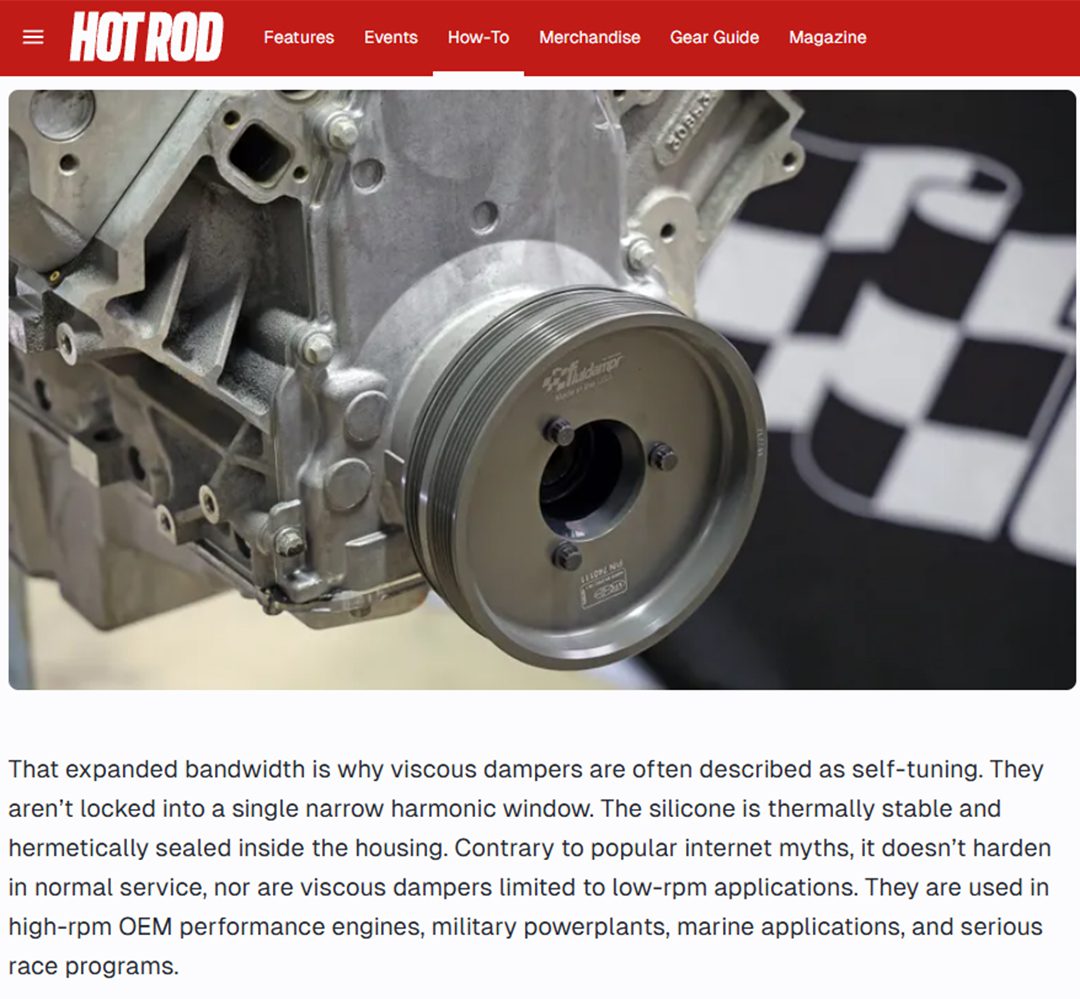
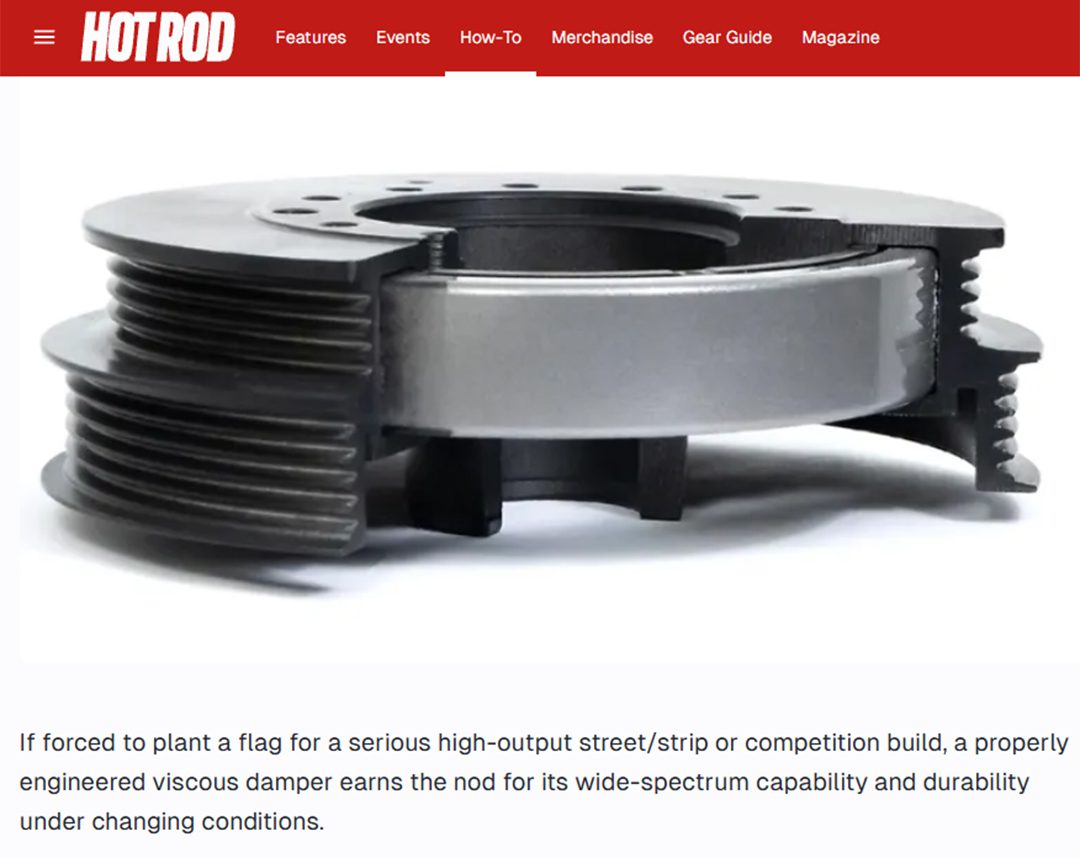
As torque and cylinder pressure increase, torsional vibration amplitude rises. The article explains how stock, narrow-range elastomer dampers are engineered around OE frequency targets. Once rotating mass or operating RPM changes, those targets shift. For performance applications, a broad-range viscous damper design — such as a Fluidampr — provides consistent damping across the RPM band, helping protect main bearings, valvetrain components, oil pumps, and timing systems.
Engineering Context for Performance Builds
For professional engine builders, tuners, and race teams, the HOT ROD feature reinforces a principle long understood by OEMs and professional motorsports programs: balancing does not eliminate torsional vibration, and controlling it with an authentic Fluidampr performance damper is essential for reliability under power, available through quality performance parts distributors and retailers.
If you’re building beyond stock power levels, this is essential reading.