
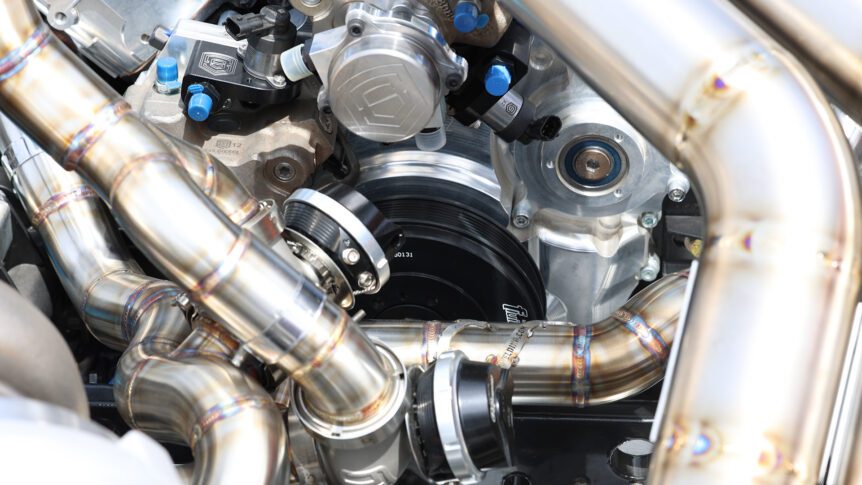
When you’re building or maintaining a high-performance Duramax, torsional vibration is not theoretical. It’s a real force acting on the crankshaft every combustion event. Left unmanaged, it accelerates wear, loosens components, and can ultimately lead to crankshaft failure. The harmonic damper is a critical component in protecting crankshaft durability. Here’s how Duramax damper installation is done right.
On externally balanced engines like the Duramax, proper installation is just as important as the damper itself. Missteps during installation can compromise balance, reduce clamp load, and introduce failure points even when using a high-quality viscous damper.
As one Fluidampr technical sales engineer explains:
“We don’t typically see failures because the damper can’t do the job. We see failures because the damper isn’t installed correctly on the crankshaft.”
As with any critical engine component, installation should follow manufacturer instructions and be performed by a qualified professional when required.
What Is an External Balance Damper?
The GM Duramax is an externally balanced engine. That means part of the crankshaft’s counterweight mass is located outside of the crank itself. Specifically in components like the damper.
As outlined in Fluidampr’s guide Engine Vibration: What It Is and How To Control It, external balance is used when there isn’t sufficient space within the engine block to contain all necessary counterweight mass internally. In this configuration, the damper becomes part of the engine’s rotational balance system and not just a device for controlling torsional vibration.
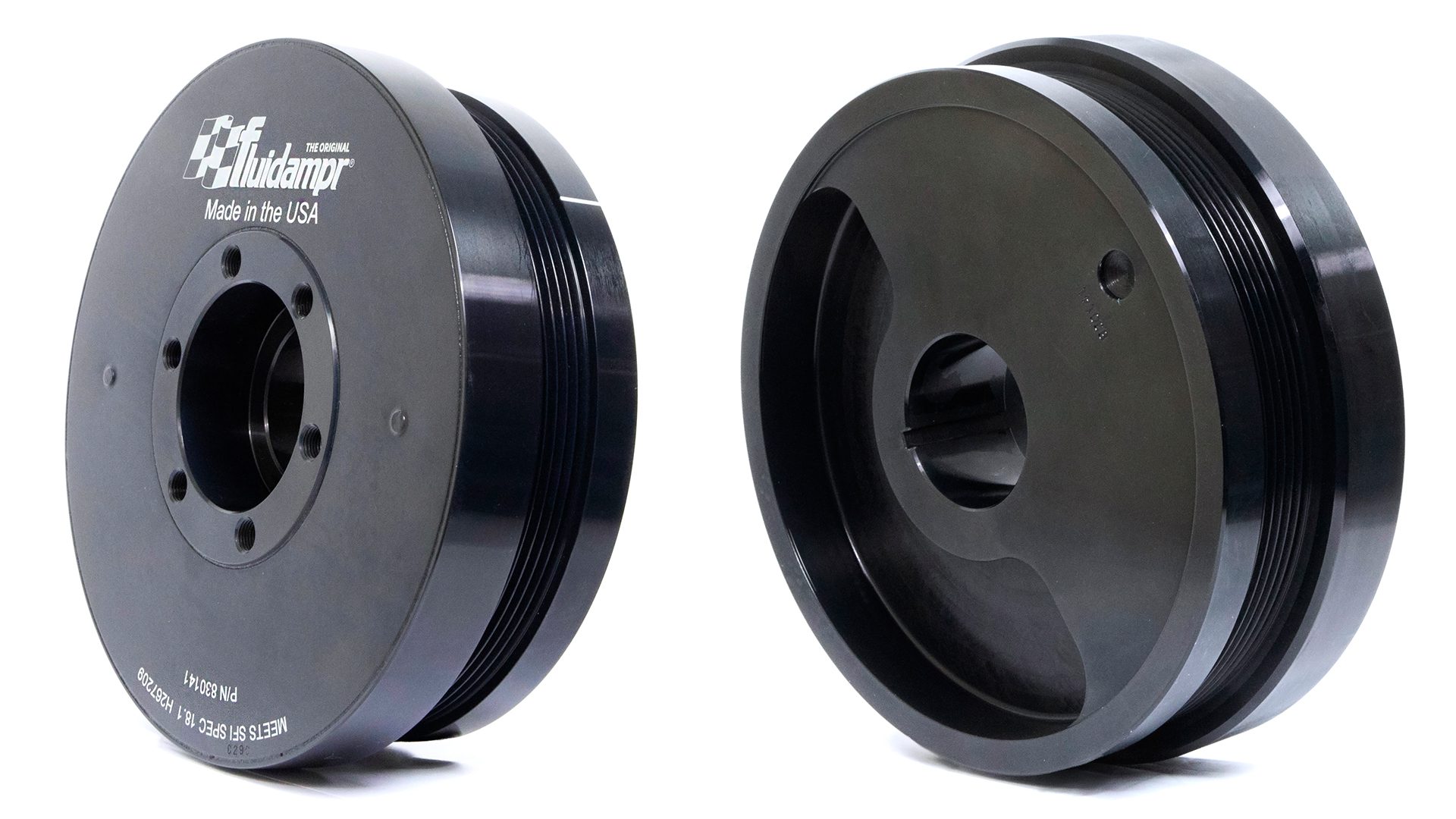
Fluidampr Performance Diesel Damper for GM/Chevy 6.6L Duramax L5P (p/n 830141). Note the half-moon shaped counterweight on the back side of the damper. This is a clear indication the rotating assembly is externally balanced.
Fluidampr Performance Diesel Damper for GM/Chevy 6.6L Duramax L5P (p/n 830141). Note the half-moon shaped counterweight on the back side of the damper. This is a clear indication the rotating assembly is externally balanced.
Why It’s Important to Know
With external balance:
- The damper must match the engine’s balance specification
- Any movement between the damper and crankshaft affects rotational balance.
- Improper installation can introduce additional rotational vibration.
This directly impacts crankshaft durability and long-term reliability.
How the OE Duramax Damper Is Mounted
From the factory, the Duramax damper system relies on:
- A small pin for alignment
- A torque-to-yield (TTY) crank bolt for retention
The OE bolt is designed to stretch during installation to achieve proper clamping force, typically using a torque-plus-angle method depending on engine generation .
Where the Problem Occurs
In stock applications, this system performs as intended. However, as power levels increase, so do the torsional loads applied to the crankshaft.
Under higher cylinder pressure:
- Clamp load from a TTY bolt can become a limiting factor.
- Movement between the damper and crankshaft may occur.
- The alignment pin can begin carrying unintended load.
This can lead to:
- Alignment pin wear or deformation.
- Loss of rotational balance accuracy.
- Increased stress on the crankshaft.
As one experienced builder puts it:
“Once a Duramax external balance damper starts slipping, it’s already too late and the alignment pin becomes a weak link.”
Upgrading to a Fluidampr: Proper Installation
A Fluidampr viscous damper is designed to control crankshaft torsional vibration across a broad RPM range. On an externally balanced Duramax, proper installation is critical to ensure that performance is maintained under load.
Fluidampr High Strength Bolt Kit
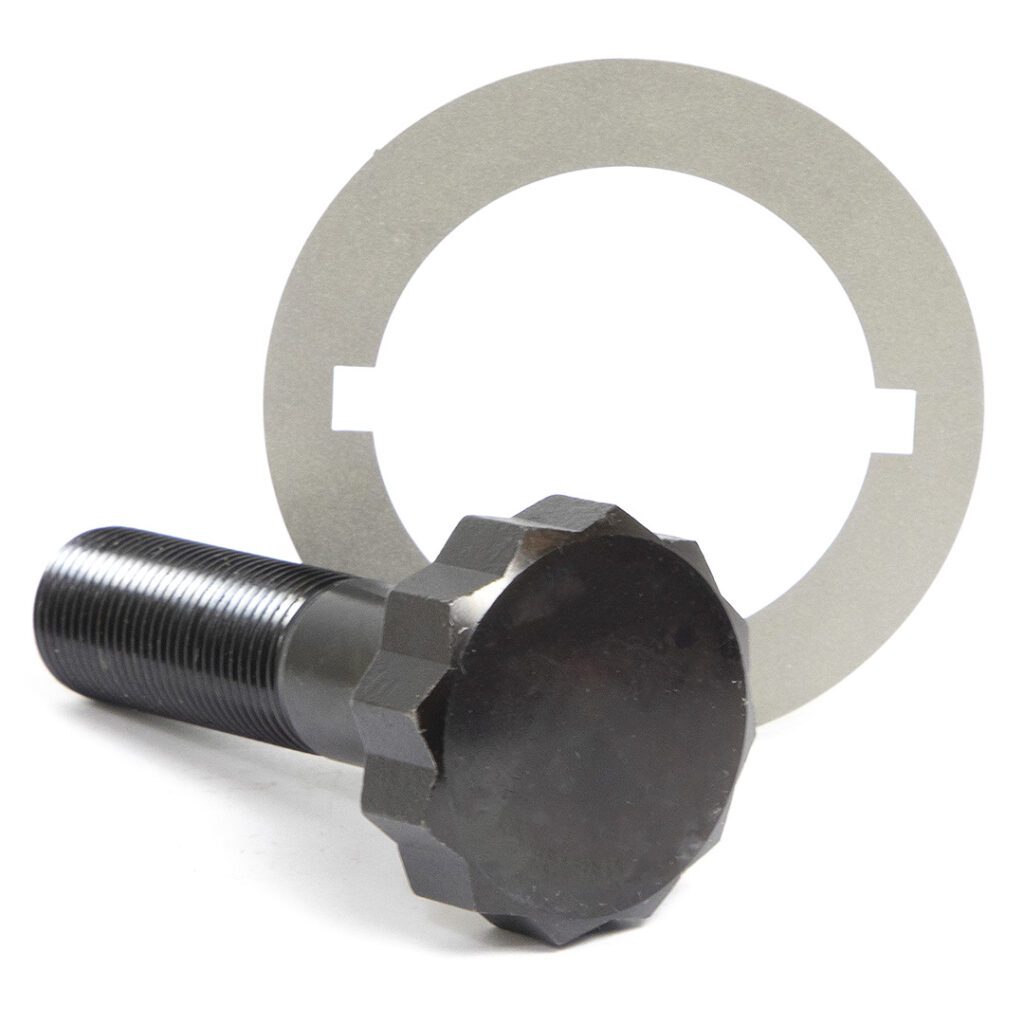
Fluidampr Duramax High Strength Bolt Kit (p/n 300010)
Fluidampr recommends replacing the OE TTY bolt with the Fluidampr High Strength Bolt Kit (p/n 300010) for improved clamp load and retention.
Proper installation includes:
- Cleaning and inspecting crankshaft threads.
- Using appropriate lubrication as specified in the instructions.
- Applying torque with a calibrated torque wrench.
- Avoiding impact tools during installation.
The included diamond coated friction washer is designed to improve surface engagement between the damper and crankshaft.
Application guidance:
Fluidampr recommends the Duramax High Strength Bolt Kit for applications at increased power levels, including builds around 500 HP and above .
Torque specifications can vary by application. Always refer to official Fluidampr instructions or OEM service information for your specific engine.
Fluidampr Drill Pin Kit
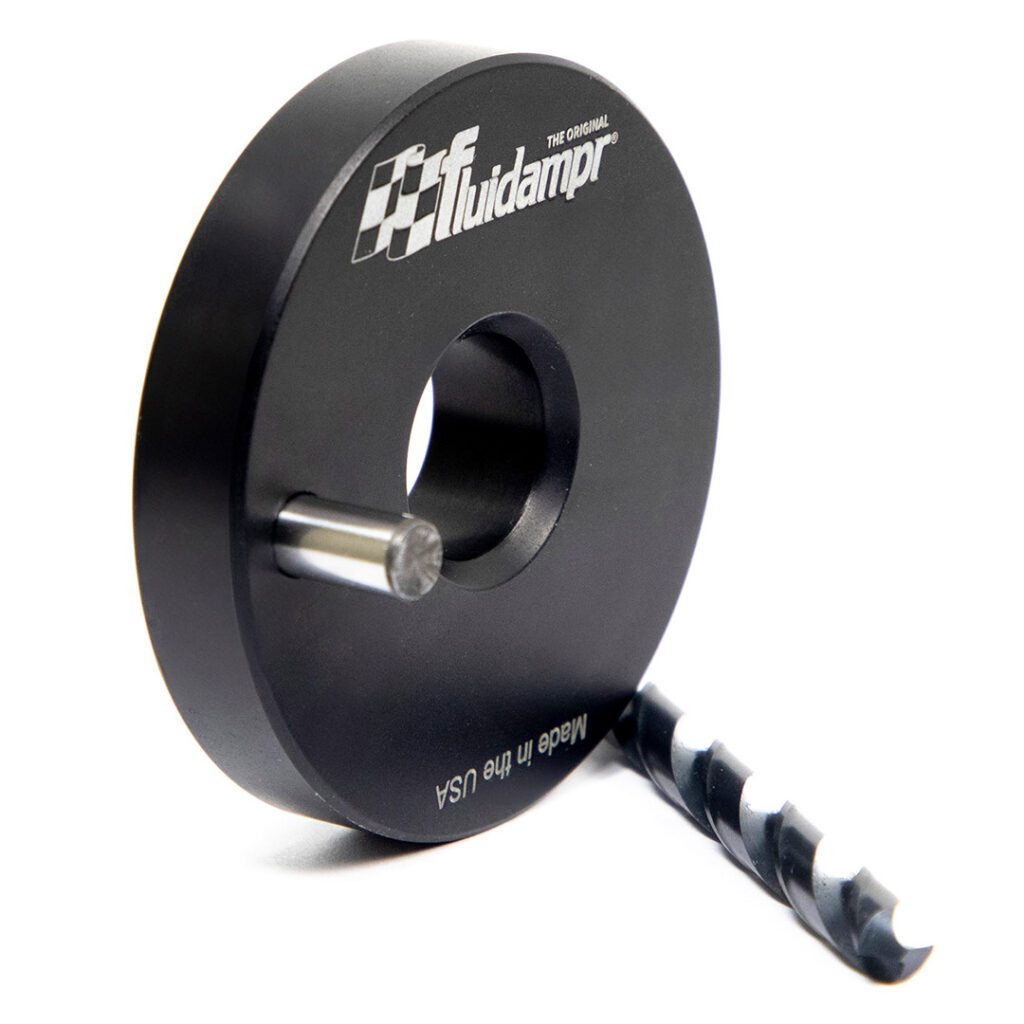
Fluidampr Duramax Drill Pin Kit (p/n 300019)
For higher horsepower or competition applications, additional mechanical retention may be required.
The Fluidampr Duramax Drill Pin Kit (p/n 300019) is designed to add a positive engagement point between the damper and crankshaft. This helps prevent relative movement under higher torque loads where friction alone may not be sufficient .
Important considerations:
- Pinning requires precision machining of the crankshaft.
- Proper tooling and fixturing are critical.
- Installation should be performed by an experienced engine builder or qualified technician.
- Always follow official Fluidampr instructions and service procedures.
Fluidampr recommends evaluating pinning for high horsepower drag racing, pulling, or similar high-load applications.
What This Solves
Upgrading both the damper and retention method helps improve:
- Stability of the externally balanced rotating assembly.
- Resistance to damper movement under increased load.
- Consistency in torsional vibration control.
As power levels increase, maintaining proper damper retention becomes an important part of overall engine reliability.
Common Mistakes Most People Make
Even experienced installers can overlook key details. The most common issues include:
- Reusing the OE TTY Bolt. Torque-to-yield bolts are designed for single use. Reusing them reduces clamp load and increases the risk of damper movement .
- Improper Surface Preparation. Dirty or damaged threads can lead to inaccurate torque readings and reduced clamping force.
- Using Impact Tools. Impact tools do not provide controlled torque and can lead to improper installation. Fluidampr does not recommend their use for damper installation .
- Skipping Additional Retention at Higher Power. At elevated torque levels, relying solely on bolt clamping may not be sufficient. Evaluating additional retention methods becomes important as output increases.
- Attempting to Modify the Damper. Fluidampr dampers are precision-balanced and sealed units. Modifying them can compromise performance and durability .
Who Gets It Right
The builders and shops that consistently see reliable results follow a disciplined process:
- They understand external balance and its impact on the rotating assembly.
- They use appropriate hardware for the application.
- They follow proper torque procedures.
- They evaluate retention strategies based on power level.
- They recheck bolt torque after initial heat cycles where applicable.
As one diesel performance shop owner summarized:
“If you treat a Duramax damper like a bolt-on accessory, you’ll have problems. If you treat it like part of the rotating assembly, it just works.”
DYI Approach
Custom GMC truck builder and content creator, Dalton McDermott, shows us the OE setup and how straight forward installing a Fluidampr Performance Diesel damper, Pin Kit, and High Strength Bolt Kit can realistically be on a Duramax.
Conclusion
On a Duramax engine, the damper is part of the balance system as well as the solution for crankshaft torsional vibration. That makes proper installation essential to maintaining crankshaft durability.
The OE design performs within stock limits. As power increases, ensuring proper clamp load and retention becomes increasingly important.
Upgrading to a Fluidampr Performance Diesel viscous damper provides broad-range crankshaft torsional vibration control. When paired with a Fluidampr High Strength Bolt Kit and Fluidampr Duramax Pin Kit, plus correct installation practices it supports durability and reliability across the operating range.
If there is any uncertainty in your application or installation process, consult Fluidampr technical support.
Frequently Asked Questions
What makes the Duramax damper different from an internally balanced engine damper?
The Duramax is an externally balanced engine, which means the damper is part of the engine’s balance system. It does more than manage torsional vibration. It also contributes to overall rotating assembly balance, which is why correct part selection and installation matter.
Why does external balance matter on a Duramax?
On an externally balanced engine, any movement between the damper and crankshaft can affect balance integrity. That can increase stress on the crankshaft, keyway, and related components. For that reason, damper fitment and retention should be treated as critical to reliability.
How is the OE Duramax damper retained?
The OE system uses an alignment pin and a torque-to-yield crank bolt for clamp load. In stock applications, that design performs as intended. As power and torque increase, builders often evaluate upgraded retention methods to better support the application.
When should a high strength bolt kit be considered for a Duramax damper?
A high strength bolt kit is commonly considered when engine output and operating loads increase beyond stock expectations. It can help improve clamp load and damper retention. Application requirements vary, so the correct choice should be based on the engine build and official Fluidampr guidance for the part number being installed.
When should a drill pin kit be considered on a Duramax?
A drill pin kit is generally evaluated for higher horsepower or competition applications where additional mechanical retention may be beneficial. Because pinning involves machining and application-specific judgment, it should be handled by a qualified engine builder and performed according to official instructions.
What is the most common mistake when installing a Duramax damper?
One of the most common mistakes is treating the damper like a simple accessory drive component instead of a critical rotating assembly part. Other issues include reusing torque-to-yield hardware, using improper installation tools, skipping thread and surface prep, or not evaluating retention needs as power increases.
Can a blog post replace the official installation instructions?
No. A technical article can explain concepts, common mistakes, and decision points, but complete installation procedures and specifications should always come from the current official Fluidampr instructions and applicable service information for the exact part number and engine.
Why do performance builders upgrade from the OE damper to a Fluidampr?
Performance builders upgrade to better manage torsional vibration across a broader operating range, especially when the engine is modified for increased torque or used in demanding conditions. On an externally balanced Duramax, the upgrade conversation typically includes both the damper itself and the method used to retain it on the crankshaft.
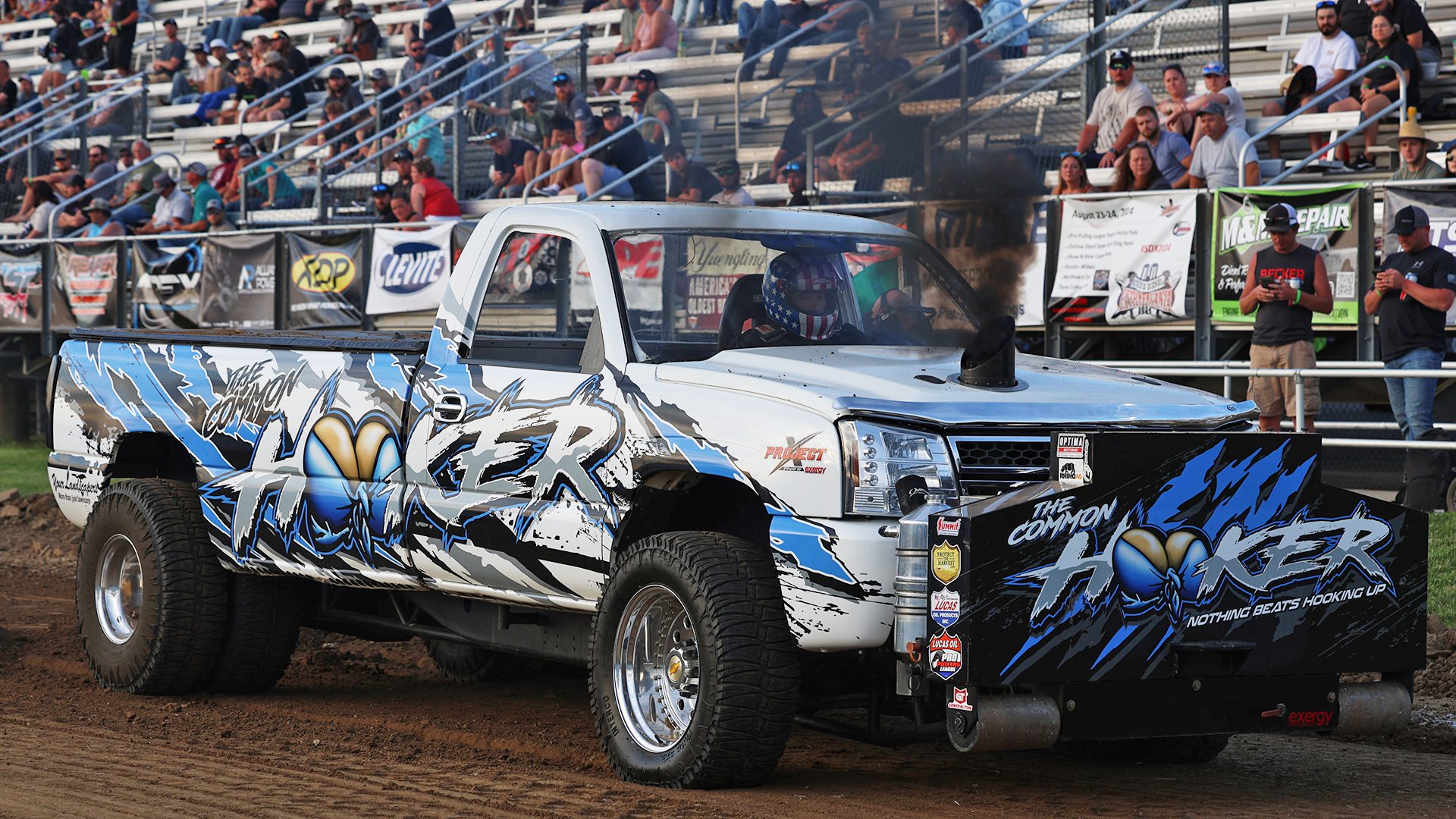
Chuck Dutter. The Common Hooker. 2024 Epic Series Pro Stock 3.0L Pulling Class during the Ultimate Callout Challenge.
####
Disclaimer
Fluidampr has no connection or affiliation in any way with General Motors. Reference in this article to any trademarked products(s), name(s), or OEM numbers is intended solely for reference to the usage for that Fluidampr part. None of the products in this article were manufactured by the previous mentioned company or their suppliers.